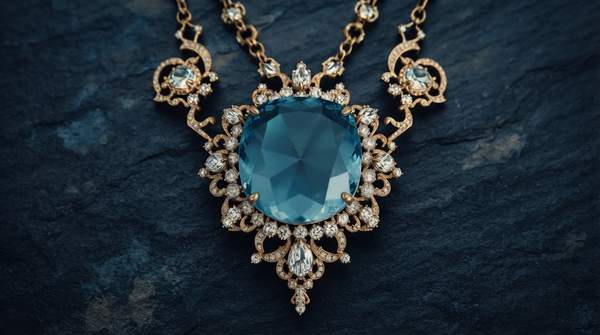
The difference between haute joaillerie and fine jewelry is not primarily price—it is a difference in philosophy of creation. Fine jewelry is crafted from genuine precious metals and natural gemstones and built to last a lifetime; haute joaillerie is the "haute couture of jewelry," in the words of Sotheby's collecting guide: one-of-a-kind or bespoke creations defined by the rarest stones, hundreds of hours of handcraftsmanship, and master artisans. The distinction matters because the two categories behave differently in the market: fine jewelry holds intrinsic material value, while high jewelry is treated as wearable art that can retain and even gain value over time.
Understanding the Landscape: Fine Jewelry vs. Haute Joaillerie
Fine jewelry, as DSF Antique Jewelry describes it, embodies "wearable elegance, everyday sophistication, and lasting value," made from 14K or 18K gold, platinum, sometimes sterling silver, and natural gemstones including diamonds, sapphires, rubies, emeralds and pearls. Unlike fashion jewelry, it carries intrinsic value. Within the category, quality varies widely: CADCAM Designs, a jewelry design service, notes that the defining characteristics are real precious metals and genuine (not simulated) gemstones, but that craftsmanship and material quality range broadly.
Haute joaillerie sits above this baseline. The Italian jeweler Scintilla frames it as "the ultimate form of art and craftsmanship expressed through the language of jewelry," distinguished by "the extra uniqueness. The touch. The rarity that is above and beyond even fine jewelry." The confusion between the labels is common—and exploited by marketing—so the criteria below are the reliable basis for telling them apart.
Comparative Framework: Haute Joaillerie vs. Fine Jewelry
The table below synthesizes the benchmarks from auction-house and trade sources into a single reference. Reading down each column shows where each category typically sits; the boundaries are indicative, not absolute, since fine jewelry spans a wide range.
| Dimension | Haute Joaillerie | Fine Jewelry |
|---|---|---|
| Materials | Exceptional-grade gemstones, 18K+ gold, platinum | Standard to high-grade gemstones, 10K–18K gold, platinum, silver |
| Craftsmanship | Master-level specialists, hundreds of hours per piece | Varies from machine-assisted to skilled handwork |
| Production / Rarity | One-of-a-kind or extremely limited editions | Ranges from mass production to custom one-offs |
| Design Philosophy | Artistic, often bespoke; a statement of the maison's creative prowess | Aesthetic appeal, often trend-following, with some custom options |
| Price Range | $10,000 to multi-millions | $100 to $50,000+ |
| Typical Clients / Market | Luxury houses, collectors, high-net-worth individuals | Retailers, independent designers, direct consumers |
Two further distinctions from the same comparison are worth noting: stone selection and finishing. High jewelry stones are hand-selected and matched for color, clarity and optical performance, with microscope-level setting precision and minimal visible metal; fine jewelry stones are typically graded to standard specifications and set with conventional prong, bezel or channel techniques, finished by machine polishing with hand touch-up.
Materials: Beyond Precious Metals
The material threshold is the easiest first test. Fine jewelry legitimately uses 14K or 18K gold, platinum and sometimes sterling silver with natural gemstones; haute joaillerie reserves itself for exceptional-grade stones and 18K-plus gold and platinum. Scintilla illustrates how even the metal baseline shifts by market: acceptable Italian gold is 18K, "considered the purest wearable form of gold whereas the rest of the world is 14K."
What separates the categories is not the presence of precious materials but their selection. Sotheby's guide identifies "the rarest diamonds and gemstones" as the defining material difference, and Scintilla attributes the exclusivity of high jewelry collections to "sheer rarity of gemstones." A piece set with certified stones in 18K gold is fine jewelry; a piece built around a rare, hand-matched stone is a candidate for haute joaillerie.
Craftsmanship and Production: Artistry vs. Accessibility
According to CADCAM Designs, the most significant distinction lies in "the allocation of time and specialized skill." Fine jewelry production ranges from machine-assisted to skilled handwork and from mass production to custom one-offs; haute joaillerie assigns master-level specialists hundreds of hours per piece, with multiple specialists spending days on hand finishing alone. Sotheby's adds that only "master artisans" execute high jewelry, with superior finishing and polishing and meticulous attention to detail.
Production scale follows from this intensity. One-of-a-kind or extremely limited editions are the high jewelry norm, which is precisely what makes such pieces sought after by collectors: no two collectors can own the same design. Fine jewelry, by contrast, is designed for everyday wear and special occasions, produced in quantities that make quality accessible.
The Art of Value: What Makes High Jewelry an Investment?
Sotheby's collecting guide is explicit about the market behavior: high jewelry pieces "retain and in many cases even gain value over time" and are "not trend-driven"—they are "wearable works of art." Scintilla echoes this: one-of-a-kind pieces "will not just only retain its value but quite likely gain value over time." Fine jewelry, by contrast, is valued primarily for its intrinsic material content—metal and stones—which is why its resale story is fundamentally different.
That appreciation is not guaranteed. It depends on the same factors that drive art markets: rarity, provenance and demand. This is why the article's comparison matters for collectors: a high price tag alone does not make a piece haute joaillerie, and a piece of haute joaillerie is not automatically a sound purchase. The value thesis rests on the confluence of exceptional materials, singular production and documented artistry.
Beyond Carats: The Role of Provenance and Artistic Vision
Sotheby's identifies two intangible drivers alongside material rarity: provenance and heritage—"historic maisons and storied ownership; cultural and historical significance"—and the maison's artistic vision, since high jewelry collections are statements of a house's creative prowess rather than responses to trends. Provenance, the documented history of who owned a piece and where it came from, functions in jewelry much as it does in painting: it converts an object into a story the market will pay for.
For the buyer, the practical implication is that value in haute joaillerie cannot be assessed by carat weight and metal purity alone. A piece's identity as the work of a named maison, its uniqueness, and its documented history are part of what is being purchased—and part of what must be verified before acquisition.
Assessing Value and Recognizing True High Jewelry
Discerning collectors should evaluate jewelry pieces not just by intrinsic material value, but by the rarity and quality of gemstones, the mastery of craftsmanship, the exclusivity of production, the artistic vision of the maison, and documented provenance. Price is a strong indicator but a consequence of these underlying factors, not the defining characteristic.
The measurable test: a piece's status as "wearable art" with potential for value retention or gain, rather than merely its initial price point or brand name, indicates true haute joaillerie. When a marketing claim cannot be backed by hand-selected rare stones, hundreds of hours of master-level handcraftsmanship, and one-of-a-kind production, the piece is fine jewelry wearing a borrowed label.
Sources
- Complete Guide to Collecting High Jewelry or Haute Joaillerie — Sothebys.com
- High Jewelry vs Fine Jewelry: What’s the Difference? — DSF Antique Jewelry
- Haute Joaillerie vs. Fine Jewelry — Cadcamdesigns
- What Is The Difference Between High And Fine Jewelry? — Scintilla