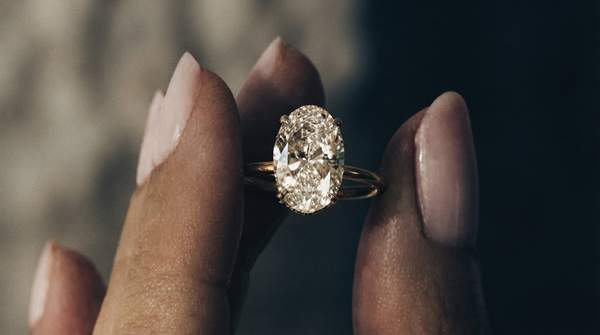
Lab-grown diamonds are real diamonds—chemically, physically, and optically the same as stones pulled from the earth—and they typically cost 50 to 80 percent less than natural stones of comparable size and quality. What separates the two is everything else: how they come into being, what the market says they are worth, and the ethical arguments attached to each. On price, the gap is widening: Colonial Jewelers reports that the average price of a one-carat lab-grown diamond has fallen from $3,410 to $892. That trajectory, not gemological quality, is what a buyer is really choosing between.
Understanding Diamond Origins: Natural vs. Lab-Grown
A natural diamond forms deep within the Earth over billions of years, without human intervention, under immense heat and pressure. Lab-grown diamonds are produced in weeks inside controlled laboratory environments using one of two established methods, each replicating natural formation through different technology.
The High-Pressure High-Temperature (HPHT) method mimics conditions inside the Earth by subjecting carbon material—graphite powder—to pressures of 5–6 GPa and temperatures of 1300–1600°C, according to Colonial Jewelers. The result is a diamond grown in a press rather than the planet.
The second route is Chemical Vapor Deposition (CVD). It involves a different technical process from HPHT, but it also yields real diamond. Production capacity is scaling rapidly: Colonial Jewelers notes that India alone is estimated to have 4,000–6,000 CVD reactors, including the company behind the largest known faceted CVD diamond to date, a 75.33-carat square emerald cut.
Identical Properties, Different Journeys: Gemological Characteristics
On the question buyers ask most—“are they real?”—jewelers are unambiguous. Helzberg Diamonds states plainly that lab-created diamonds have the same physical, chemical, and optical properties as natural diamonds and test as real diamonds. Queensmith reaches the same conclusion. Whichever growth route is used, HPHT or CVD, the finished stone is not a simulant like cubic zirconia or moissanite; it is carbon crystallized exactly as nature does it.
The stones are not interchangeable in every respect, however. Queensmith notes that while identical in properties, trained gemologists can distinguish the two using specialized equipment. The distinction is one of provenance, not substance: a lab-grown diamond lacks the rarity and billion-year story of a natural one, which matters to value and meaning even though it has no effect on how the stone looks or performs in a setting.