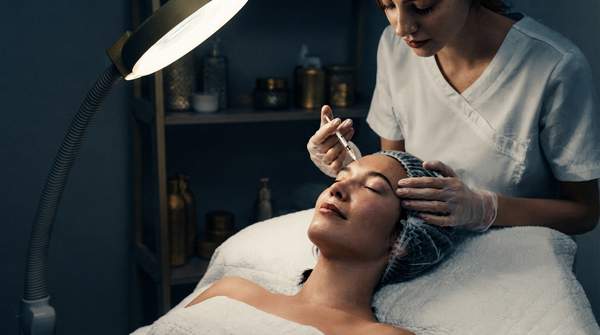
Exosome therapy is an emerging frontier in anti-aging skincare, showing potential to revitalize skin by using the body’s own cellular communication system. These microscopic vesicles act as messengers, delivering molecular instructions to skin cells that can encourage repair and regeneration. Proponents claim they can stimulate the production of collagen and elastin, essential proteins for firm, youthful skin. However, the science is in its early stages. While preclinical studies are promising, exosome products for cosmetic use currently operate in a landscape without robust clinical validation for anti-aging or approval from the U.S. Food and Drug Administration.
What Are Exosomes?
Exosomes are tiny, stable byproducts released by cells that function as a sophisticated intercellular postal service. They are not cells themselves but rather small sacs containing a cargo of signaling molecules, including proteins, lipids, and nucleic acids. According to scientific reviews, these packages are absorbed by neighboring or distant cells, where they release their contents to influence the recipient cell's behavior. This process of intercellular communication is fundamental to tissue repair and maintenance.
In skincare, exosomes are formulated into products like serums and gels. They can be derived from human sources, such as umbilical cord blood or platelets, as well as from animals or plants. Regardless of their origin, their purported function remains the same: to deliver targeted signals that trigger a regenerative response in existing skin cells. This mechanism allows them to modulate cellular pathways and alter the substances that cells produce, potentially slowing the visible signs of skin aging.
How Exosomes Rejuvenate Skin: A Cellular Pathway
The anti-aging potential of exosome therapy lies in its ability to directly influence the behavior of skin cells. The process, from application to cellular response, follows a specific biological pathway based on findings from preclinical research.
- Application and Penetration
Exosome treatments are typically formulated as topical gels or serums. For these products to be effective, the exosomes must penetrate the outer layer of the skin to reach the target cells below. To enhance this process, clinicians may pair the topical application with procedures like microneedling, which creates micro-channels in the skin to allow for deeper absorption. - Cellular Absorption
Once they bypass the skin's barrier, exosomes are taken up by recipient cells, particularly fibroblasts, which are responsible for producing the skin's structural proteins. Their stable structure allows them to travel within the skin and effectively merge with these target cells. - Delivery of Molecular Signals
After being absorbed, an exosome releases its internal cargo of bioactive molecules. These molecules act as direct instructions, altering the function of the recipient cell. This cargo can include growth factors and specific microRNAs that regulate gene expression. - Resulting Cellular Changes
The delivered signals can prompt fibroblasts to increase their production of collagen and elastin, the proteins that give skin its firmness and elasticity. Simultaneously, some studies suggest these signals can decrease the expression of matrix metalloproteinases (MMPs), which are enzymes that break down collagen. This dual action helps rebuild and preserve the skin's structural integrity.