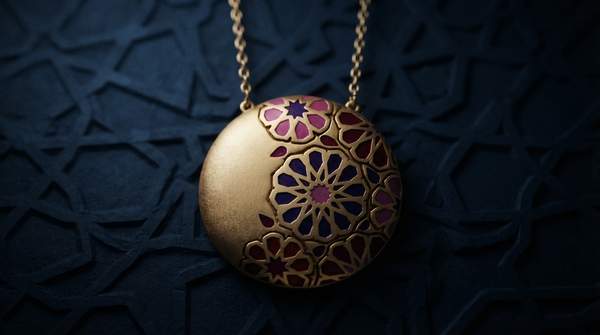
Enameling, the ancient art of fusing glass to metal, is a skillful alchemy that transforms jewelry into miniature masterpieces of vibrant color and light. Behind this single word lies a world of complex and varied techniques, each with its own history, process, and unique visual signature. From the bold, graphic lines of champlevé to the ethereal, stained-glass effect of plique-à-jour, the method chosen by an artisan defines the final character of a piece. Understanding the distinctions between these core techniques allows for a deeper appreciation of the craftsmanship and artistic vision inherent in high jewelry.
The four principal methods that have defined haute joaillerie for centuries are cloisonné, champlevé, basse-taille, and plique-à-jour. While all involve the meticulous application and firing of vitreous enamel, they differ fundamentally in how the metal base is prepared to receive the color. One method builds partitions upward, another carves them downward, a third sculpts the surface beneath a transparent layer, and the last removes the foundation entirely to let light shine through.
A Historical Journey Through Enamel
The practice of enameling is an age-old craft that master glassmakers have continually reinvented over the centuries. Its origins trace back to antiquity, with evidence of its use in Ancient Greece as early as the second millennium B.C. The Gemological Institute of America (GIA) notes that the oldest form of fine enameling, cloisonné, was practiced by Greek goldsmiths in the 4th century B.C.E., who created imaginative designs by inlaying enamel within delicate gold wire outlines. The art form evolved significantly over time, with the champlevé technique gaining popularity in Western Europe during the 12th century for the adornment of religious artifacts.
A major shift occurred in the early 17th century when Jean Toutin of Blois, France, introduced high-quality miniature paintings on enamel. This innovation moved the craft beyond the realm of goldsmiths and into that of artists with exceptional drawing skills, leading to its use in fine jewelry and watches. The art form saw another major resurgence during the Art Nouveau period between 1880 and 1914, which championed the difficult and luminous plique-à-jour technique to achieve its signature naturalistic and ethereal designs.
Comparative Guide to Enameling Techniques
To distinguish between the major enameling techniques found in high jewelry, it is essential to understand how the metal is prepared and how that preparation creates a distinct visual effect. The following guide details the process and aesthetic outcome of four key methods.
| Technique | Metal Preparation Method | Enamel Application | Key Visual Effect |
|---|---|---|---|
| Cloisonné | Thin metal wires (cloisons) are soldered onto a metal base to create compartments or cells. | Vitreous enamel is carefully applied within the wire compartments and then fired. | Creates distinct, outlined areas of vibrant color with clear separations, recalling the appearance of damascene work. |
| Champlevé | Recesses or cells are carved, engraved, or etched directly into the surface of the metal base. | Enamel is filled into the carved recesses, often up to the level of the surrounding metal. | Produces bold, defined areas of color that are integrated into the metal surface, with strong metallic outlines. |
| Basse-Taille | A low-relief pattern is created on the metal surface by engraving, carving, or stamping cuts of varying depths. | Transparent or translucent enamel is applied over the entire textured surface. | Generates an illusion of depth and varying shades of color as light plays across the textured metal beneath the enamel. |
| Plique-à-Jour | Cells are formed with metal wires, similar to cloisonné, but without a solid metal backing. | Enamel is suspended within the wire frame and fired, often with a temporary backing that is later removed. | Achieves a luminous, translucent effect similar to a stained-glass window, allowing light to pass directly through the color. |
Cloisonné: Building Cells with Wire
The term cloisonné comes from the French word for "partition." In this ancient technique, the artisan first creates the design's outline by soldering thin, flattened metal wires onto a metal base. These wires form small compartments, or cloisons, which are then meticulously filled with vitreous enamel powder. After firing in a kiln, the enamel fuses into a smooth, glassy surface contained within the gilt wiring. The result is a design characterized by crisp, clearly defined areas of color, separated by the fine lines of the metal partitions.
Champlevé: Carving into Metal
Champlevé, meaning "raised field" in French, is in many ways the inverse of cloisonné. Instead of building cells up, the artist carves, etches, or chisels recesses directly into a thicker metal plate, leaving the original surface as the dividing lines. These troughs are then filled with enamel. This process, which became popular in the Gothic era, creates a dynamic and dramatic contrast between the vibrant enamel and the surrounding metal. The final effect is one of bold, strong lines where the color appears deeply integrated into the body of the piece.
Basse-Taille: Sculpting with Light
Basse-taille, or "low cut," is a sophisticated technique that plays with light and depth. According to the GIA, the artist first engraves or carves a low-relief design into the metal. The key to this method is the application of transparent or translucent enamel over the textured surface. When fired, the enamel allows the underlying pattern to show through. The varying depths of the metal cuts cause the light to refract differently, creating a beautiful illusion of depth and a palette of rich shades from a single hue. Blues and greens are often favored, as they showcase a wide range of tones with this technique.
Plique-à-Jour: Creating Stained Glass
Perhaps the most challenging of the traditional techniques, plique-à-jour—French for "letting in daylight"—creates a breathtaking, stained-glass effect. The process is similar to cloisonné in that it uses a framework of metal wires to form cells. However, it is distinguished by the absence of a metal backing. Enamel is carefully applied and suspended within this open framework and then fired. The result is a delicate, translucent web of color that allows light to pass through, giving the piece a luminous, ethereal quality. This technique was a hallmark of the Art Nouveau movement, perfectly suited to its organic and fantastical motifs.
Appreciating Enamel in High Jewelry
When evaluating or selecting high jewelry, identify the specific enameling technique used to understand its craftsmanship and unique visual contribution. Each method presents its own set of artistic challenges and aesthetic possibilities. Recognizing the difference between the crisp outlines of cloisonné, the integrated depth of champlevé, the subtle shading of basse-taille, or the radiant transparency of plique-à-jour elevates the experience of a piece from simple admiration to informed appreciation. The ability to correctly name and describe the visual effect of cloisonné, champlevé, basse-taille, or plique-à-jour in a jewelry piece is the key to understanding the profound artistry fused into its creation.
Sources
- [Talk Repay] The Art of Enameling — Lecolevancleefarpels
- The Art of Enameling: The Techniques — GIA 4Cs
- Enameling 101: How To Learn Common Enameling Techniques — The Crucible
- History of Enameling Techniques — M.S. Rau
- A Guide to Enameling History and Techniques — WizardPins
- Enamels on Jewelry - Antique Jewelry University