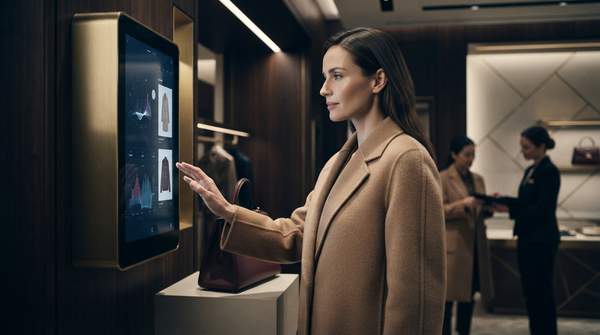
The luxury retail sector is undergoing a significant transformation, moving beyond traditional product-focused sales to embrace immersive, technology-driven experiences. This strategic shift, often termed "retailtainment," aims to differentiate physical stores in an increasingly online world by engaging consumers on an emotional level through dynamic, multi-sensory interactions. As customers seek memorable and unique encounters, this approach becomes a powerful tool for luxury Maisons to cultivate loyalty and enhance satisfaction.
The focus has moved from merely showcasing product features to delivering an experience-based strategy, which is crucial for luxury brands seeking to create unique and lasting impressions. Farfetch's Augmented Store and Burberry's Interactive Shenzhen Flagship stand out as prime examples of this innovation, each employing distinct technological features and personalized services to redefine the high-end shopping journey and transform physical spaces into engaging destinations.
Farfetch's Augmented Store: A Data-Driven Approach
Farfetch's Augmented Store, part of its "Store of the Future" initiative, exemplifies a cutting-edge approach to retailtainment by seamlessly integrating technology with fashion. Located in London, this store is designed to connect the online and offline shopping experiences, making each visit personalized and data-driven. The core of its innovation lies in its ability to leverage digital insights within a physical space, aiming to provide a tailored experience for every customer.
Key technological features include connected racks, which can likely provide detailed information about garments as customers browse, potentially offering styling suggestions or inventory availability. Touch-enabled mirrors further enhance the interactive experience, possibly allowing for virtual try-ons, access to a broader online catalog, or requesting different sizes and colors directly to the fitting room. Digital check-ins streamline the customer journey by potentially linking a shopper's online profile with their in-store activities, enabling the store to offer data-driven recommendations and a more personalized interaction from the moment they arrive.
While the specific artificial intelligence technologies or algorithms used by Farfetch for personalization are not detailed in available reports, the overall design points to a sophisticated system that tailors interactions and product recommendations based on collected data. This approach aims to enhance the customer's individual experience by making it more efficient, relevant, and deeply integrated with their digital shopping habits.
Burberry's Interactive Shenzhen Flagship: Social Retail Redefined
Burberry's Interactive Shenzhen Flagship, developed in partnership with Tencent, redefines luxury retail by integrating social media interactions directly into the physical store environment. This concept, described as luxury's first social retail store, caters to Shenzhen's reputation as a technology hub, offering a highly interactive and shareable shopping experience that blurs the lines between online and offline engagement.
The cornerstone of the Shenzhen store's technology is a custom WeChat mini-program, which acts as a bespoke "digital companion" for shoppers, according to Mann Report. This mini-program, developed with Tencent, brings the store to life through exclusive content and personalized experiences that can be unlocked via WeChat. Through this app, customers can create a profile and receive a digital avatar, a cartoon fawn that hatches from an egg, adding a gamified element to their visit. This digital companion is tailored to enhance the customer's experience whether they are physically in the store or engaging virtually.
Shoppers can use the app to interact with window displays, book one of three themed fitting rooms, pre-select clothes, and even play their own music while trying on items, as reported by Dezeen. The mini-program also provides access to store tours, detailed product information, dedicated client services, in-store appointment bookings, events, and table reservations at Thomas's Cafe, the store's community space. These features are designed not only to personalize the experience but also to be shareable with customers' communities, fostering a sense of social connection and amplifying the store's reach through digital word-of-mouth.
Comparing Luxury's Digital Frontiers
Farfetch's Augmented Store and Burberry's Interactive Shenzhen Flagship represent distinct yet equally innovative strategies in luxury retail, each leveraging technology to create unique customer journeys. Farfetch's approach, exemplified by its London store, focuses on a data-driven, seamless integration of online and offline platforms to deliver a highly personalized and efficient experience. Its connected racks, touch-enabled mirrors, and digital check-ins are designed to streamline the shopping process and tailor interactions based on individual customer data, making the physical store an extension of the digital one.
In contrast, Burberry's Shenzhen Flagship emphasizes social interaction and community sharing, deeply embedding the retail experience within China's dominant social media ecosystem, WeChat. Its bespoke mini-program acts as a comprehensive digital companion, enabling features like avatar creation, personalized music in fitting rooms, and the ability to unlock and share exclusive content. This strategy transforms shopping into a social activity, encouraging customers to engage with the brand and their peers in a playful and interactive manner.
Both brands exemplify the broader trend of experiential retail, moving beyond transactional exchanges to create engaging, memorable, and unique encounters. While Farfetch prioritizes individual data-driven personalization and efficiency, Burberry champions social engagement and "retailtainment" through its integration with a powerful social platform. Their distinct strategies highlight the diverse ways luxury Maisons are adapting to consumer demands for immersive experiences, transforming physical stores into dynamic, digitally enhanced destinations.
Luxury Retail Innovation Comparison
| Brand | Technological Features | Personalized Services |
|---|---|---|
| Farfetch's Augmented Store | Features connected racks, touch-enabled mirrors, and digital check-ins, seamlessly connecting online and offline platforms. These features are part of Farfetch's 'Store of the Future' initiative. | Offers a personalized and data-driven in-store experience. The specific AI technologies or algorithms used by Farfetch for personalization are not detailed. |
| Burberry's Interactive Shenzhen Flagship | Utilizes a dedicated WeChat mini-program, interactive window displays, and Tencent technology to integrate social media with physical retail. The mini-program serves as a 'digital companion' for shoppers. | Enables avatar creation, personalized music in fitting rooms, booking of themed fitting rooms, unlocking exclusive content, and dedicated client services through the WeChat mini-program. These services are designed to be shareable with customers' communities. |
Navigating the Future of Luxury Retail
Luxury brands seeking to enhance customer engagement should integrate technology to create personalized, data-driven, and interactive in-store experiences. The distinct strategies employed by Farfetch and Burberry demonstrate the potential for technology to transform physical retail into dynamic, engaging environments. A measurable indicator of success in this endeavor would be increased customer dwell time and interaction with digital features within physical store environments, reflecting deeper engagement beyond traditional shopping.
Sources
- Experiential Retail — Deloitte Insights
- Burberry Debuts Luxury’s First Social Retail Store in Shenzhen, China, Powered by Tencent Technology – Mann Report — Mannpublications
- DEZEEN