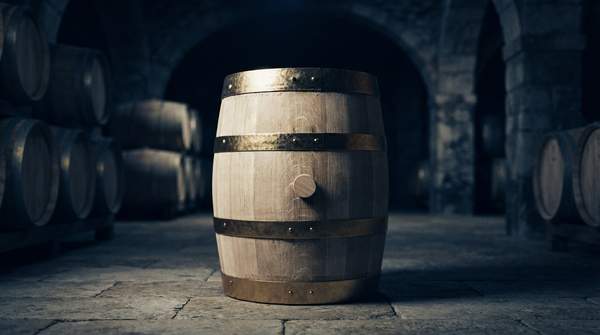
The difference between a bourbon's creamy vanilla sweetness and a rye's peppery bite often comes down to chemistry inside the barrel. American white oak, the wood legally required for bourbon maturation, is rich in vanillin and oak lactones—compounds that translate directly into vanilla and coconut notes. French oak, by contrast, carries lignin derivatives that break down into clove-like spice and eugenol, alongside more subtle tannins. Understanding these compounds lets you trace almost any familiar flavor in a glass back to the wood that made it.
Three Core Chemical Processes Shaping Flavor
Barrel aging is not passive storage; it is a slow chemical exchange between spirit and wood. The first mechanism is extraction: the alcohol draws compounds directly out of the oak, including vanillin, the sweet vanilla molecule that appears prominently in bourbon aged in new charred barrels, and tannins, which provide structure and a slight drying sensation on the palate.
The second is the breakdown of wood polymers. Oak's structural components—lignin and hemicellulose—do not stay inert. Lignin derivatives decompose into smoky flavors, clove, and eugenol spice, while hemicellulose sugars transform under heat into caramelized sweetness. The third process is oxidation: the tight grain of American white oak, for instance, holds liquid securely while still allowing controlled oxidation, which softens the spirit and integrates these extracted compounds over time.
The Impact of Charring: Transforming Wood into Flavor
Before a barrel is filled, its interior is burned to produce char, and that step rewires the wood's chemistry. The hemicellulose sugars in the oak caramelize during charring, creating the caramel, toffee, and butterscotch notes that define many aged spirits. Lignin, meanwhile, breaks down under the same heat into the smoky, spicy compounds described above.
The depth of the burn matters as much as the burning itself. According to barrel-aging guidance from Horizon Beverage, lightly charred woods stay sweet and take on a toasted flavor, while heavily charred woods produce spicy, smoky flavors. Distillers therefore treat char level as a flavor dial: a light toast leans toward sweetness, while a heavy char pushes the spirit toward smoke and spice.
American Oak: Vanilla, Coconut, and Sweetness
American oak, specifically Quercus alba, is the backbone of bourbon and most American whiskey production. By law, bourbon must age in new charred oak barrels made from American white oak, a requirement that gives the spirit its distinctive sweetness and warmth. The wood's chemical signature explains why: it is rich in vanillin and oak lactones, the latter contributing coconut and woody character most strongly in American oak.
The sensory result is unmistakable. Industry guides describe American oak as imparting vanilla and coconut notes, and distillers at Hush and Whisper note caramel, vanilla, and faint coconut character from these barrels, with a fuller, oaky flavor and sweeter profile overall. Some producers also find butterscotch, dill, and tobacco flavors emerging from this wood, making it the choice for spirits where bold sweetness is the goal.
French Oak: Spice, Tannins, and Subtle Complexity
French oak, Quercus robur, works differently. Its lignin derivatives break down into smoky flavors, clove, and eugenol spice, and the wood contributes more subtle tannins than its American counterpart. Where American oak announces itself, French oak layers: the result is a more complex flavor profile with less intense oak character.
In practice, this means spicy, peppery, and cedar notes with mellow spices and only subtle vanilla. Writing for Northeast Barrel Company, Charlie Deptula notes that wood takes on the characteristics of its region—soil, weather, and climate all shape the flavors oak contributes—and that American rye producers often use French oak specifically to accentuate the spicy, peppery notes of their whiskey. Hungarian oak, mentioned by Distillery University as offering a balance between the two styles, illustrates that other options exist, though American and French oak dominate traditional spirit aging.
American vs. French Oak: A Chemical Flavor Map
The table below juxtaposes the two woods' chemistry so you can trace each familiar flavor to its molecular source. The pattern is consistent: American oak leads with vanillin and lactones, producing pronounced sweetness, while French oak leads with lignin-derived spice compounds and tannins, producing structure and subtlety.
| Oak Type | Key Chemical Compounds | Resulting Flavor Profile |
|---|---|---|
| American Oak (Quercus alba) | Rich in vanillin (sweet vanilla) and oak lactones (coconut and woody character, strongest in American oak); hemicellulose sugars that caramelize during charring | Prominent vanilla, coconut, caramel, and butterscotch; a fuller, oaky, sweeter profile; can also show dill and tobacco notes |
| French Oak (Quercus robur) | Lignin derivatives that break down into smoky flavors, clove, and eugenol spice; more subtle tannins than American oak | Spicy, peppery, and cedar notes with mellow spices and subtle vanilla; a more complex profile with less intense oak character |
Read side by side, the comparison explains a common tasting experience: a bold coconut-vanilla bourbon almost certainly matured in American oak, while a peppery, clove-tinged rye points toward French oak influence. The compounds are the fingerprint; the flavors are the print they leave.
Choosing Your Spirit's Flavor Journey
To achieve specific flavor profiles in spirits, distillers must intentionally select between American and French oak barrels, understanding the distinct chemical compounds each contributes. The choice is not aesthetic but molecular: vanillin and lactones for sweetness and coconut, lignin derivatives and tannins for spice and structure.
For the drinker, the payoff is a practical tasting skill. The flavor profile of a spirit, particularly the presence and intensity of vanilla, coconut, or spice notes, will directly signal the type of oak barrel used for aging. The next time a whiskey offers creamy vanilla and coconut, you can reasonably infer American white oak; a wave of clove and pepper suggests French oak did the work.
Sources
- History of Barrel Aging Spirits — Horizon Beverage
- How Barrel Aging Shapes the Flavor of Whiskey — Hush and Whisper Distilling Co
- Difference Between French Oak and American Oak — northeastbarrelcompany
- The Art of Barrel Aging Spirits: A Guide for Craft Distillers — Distillery University