The most exclusive watch dials in the world are not painted, lacquered, or printed. They are cut from material that fell from space or formed deep within the Earth, and their rarity comes from three distinct sources: a finite natural supply, the difficulty of working an unforgiving material, and the fact that no two finished dials can ever look alike. Understanding which of these drivers applies to a given dial is the difference between reading a marketing label and genuinely evaluating a watch. This comparison focuses on the two material families best documented by horological sources—meteorite and hardstone, with malachite as the illustrative stone—and positions them against the artisanal logic of marquetry.
The Allure of Exotic Watch Dials
Exotic dials occupy a special place in watchmaking because they promise something no serially produced dial can: singularity. As Collecting.com observed in its survey of exotic dials, the main attraction of using exotic materials in dial making is exclusivity itself—"there is no greater draw to collectors of luxury items of any description than owning a one-off, some piece unique to you and you alone." A standard dial can be reproduced indefinitely, in any quantity, from a stable of industrial processes. A dial sliced from a meteorite fragment or a band of malachite cannot.
That singularity takes different forms depending on the material, and it is worth separating them before examining each family in turn. In some cases, rarity is geological or even astronomical: the raw material simply exists in limited quantity on Earth. In others, rarity is manufactured—created not by what the material is, but by how difficult it is for a human hand to turn it into a dial barely a few centimeters across. And in nearly all cases, natural variation guarantees that every finished dial is visually unique, a trait that collectors prize precisely because it cannot be replicated by another buyer's wrist.
Meteorite Dials: A Glimpse of the Cosmos
Meteorite dials are manufactured from actual meteorite fragments that travelled through space before landing on Earth, as the material specialists at Barrington Watch Winders describe. This is not a meteorite-inspired finish or an evocation of cosmic texture—it is a slice of an iron body billions of years old, and the aesthetic that makes it famous is written into the metal itself. The Widmanstätten pattern, the lattice of intersecting lines and geometric shapes that collectors associate with meteorite dials, formed over cosmic timescales: as Bob's Watches puts it, the pattern on the wrist "pre-dates the dinosaurs, and pre-dates complex life."
Because the pattern is a property of the material rather than an applied decoration, each dial cut from a meteorite is inherently one of a kind. That produces both the category's appeal and its peculiar practical burden. Since every dial is unique, replacement is impossible—a damaged meteorite dial cannot be swapped for an identical spare, which is why that same buyer's guide emphasizes that careful case sealing and regular servicing to prevent water damage are of utmost importance for meteorite-dial owners. The material must also be stabilized by manufacturers to be workable as a dial, and the pattern itself cannot be chosen or standardized: the buyer accepts the slice nature provides.
The scarcity story is sharpened by the case of the Gibeon meteorite, the Namibian iron meteorite long used for dials, notably by Rolex. Collecting.com reports that Namibian law now prohibits any further harvesting of the Gibeon meteorite, and that while Rolex procured a healthy supply before that ruling was passed, the material is "certainly now a finite resource." The Gibeon is recognized as one of Namibia's national monuments, and the legal protection means the existing stock of dial-grade material can only shrink. This is exclusivity of the purest kind: no new supply will ever enter the market, and each watch made from that stock draws down what remains.
Hardstone Dials: Earth's Artistic Palette
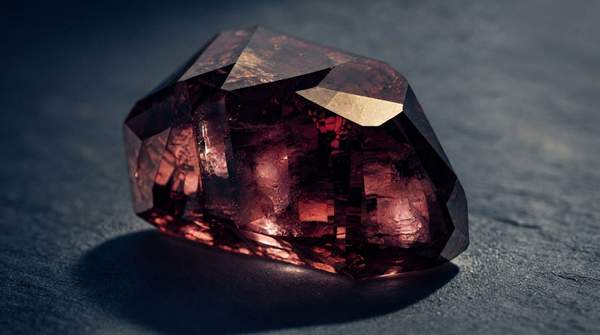
Hardstone dials draw their character from the opposite direction—from below rather than above. Malachite, a vivid green stone formed naturally within the Earth, is a representative example and one of the most visually dramatic. Barrington Watch Winders highlights its "dramatic swirling band patterns," noting that the stone's layered structure produces organic, wave-like patterns that make every dial unique. Where a meteorite dial's character is crystalline and geometric, a malachite dial's is fluid, with strong natural movement across the surface.
The same layered structure that creates that beauty is also the source of the category's defining technical challenge. Malachite is relatively fragile, and its strata mean that cutting a thin, flat dial from the stone risks fracture along the layers; the material must be cut with great care and stabilized during manufacturing to survive as a dial. High-quality stone dials are, for that reason, considered both technically demanding and visually prestigious in equal measure. A dial that cracks during production consumes stone that cannot be recovered, so the craft challenge compounds the material cost of each finished piece.
The exclusivity of hardstone operates on a different axis from meteorite. The stone itself is not necessarily astronomical in age or legally protected in its origin; what makes a fine malachite dial rare is the combination of natural pattern uniqueness—no two slices of the banded stone match—and the skilled, wasteful process of stabilizing a fragile material into a watch component. Marquetry, the third major family of exotic dial-making, pushes this artisanal logic to its extreme: rather than stabilizing a single natural slice, the marquetry inlayer assembles many tiny fragments of material into a composed picture, shifting exclusivity almost entirely from the material to the maker's hand and hours.
Exotic Watch Dial Materials: A Comparative Framework
The table below contrasts three documented categories of exotic watch dial materials across a consistent set of criteria—origin, technical challenge, exclusivity driver, and aesthetic—so that the differences between them can be read at a glance rather than pieced together from separate descriptions. Where evidence documents a characteristic only for a specific stone rather than the whole category, the cell reflects that limitation.
| Material Category | Origin | Key Technical Challenge | Primary Source of Exclusivity | Resulting Aesthetic |
|---|---|---|---|---|
| Meteorite | Extraterrestrial: actual meteorite fragments that travelled through space before landing on Earth | Stabilization of the material by manufacturers; each dial is irreplaceable, so case sealing and regular service are critical to prevent water damage | Inherent material scarcity—the Gibeon meteorite is a finite resource, with Namibian law prohibiting further harvesting | Widmanstätten pattern of intersecting lines and geometric shapes; every dial distinct |
| Hardstone (e.g., malachite) | Geological: stone formed naturally within the Earth | Fragility from the layered structure, requiring careful cutting and stabilization during manufacturing | Natural pattern uniqueness combined with the difficulty of producing an intact stone dial | — |
| Marquetry | An artistic technique arranging cut pieces of materials like wood, straw, feathers, or stone into patterns or images | Requires careful preparation, cutting, and precise hand-placement of each piece; demands years of training, high manual skill, and artistic composition | Intensive manual skill, artistic expertise, and time required for production, making each piece unique and non-scalable | Can create naturalistic, painting-like images or modern abstract motifs with bold lines, ensuring a seamless blend of colors, textures, and patterns |
One cell is deliberately left blank: the documented aesthetic evidence covers malachite specifically—its vivid green colour and swirling bands—rather than a general hardstone aesthetic, which varies stone by stone. The comparison nonetheless makes the structural contrast clear. Meteorite dials are exclusive primarily because the raw material is finite and legally closed to new supply; hardstone dials are exclusive primarily because nature never repeats a pattern and because fragility makes production demanding. Marquetry dials are exclusive due to the extensive training, manual skill, and artistic taste required, making their production non-scalable. In both meteorite and hardstone cases, the finished dial's appearance cannot be specified in advance—it is discovered when the material is cut, whereas marquetry allows for planned artistic composition.
Comparing Exclusivity: Scarcity, Craft, and Nature
Read together, the two categories reveal that "exotic" is not one kind of value but three, and they do not always overlap. Material scarcity is the driver that cannot be reversed: as Bob's Watches frames the meteorite question, a regular dial "can be re-used indefinitely," whereas "a meteorite dial has material scarcity as well"—once the Gibeon stock is consumed, no legislation or craftsmanship can replenish it. Craftsmanship complexity, by contrast, is a renewable but expensive form of rarity, since each fragile malachite dial demands careful cutting and stabilization, and each attempt risks destroying the stone.
The third driver, natural variation, is shared by both families and is what ultimately converts material into a collector's object. Collecting.com notes that while "no two parts of a meteorite would be identical," exclusivity does not require going to such lengths to achieve "a completely singular look"—malachite's organic wave-like banding achieves the same one-of-one result from an earthly source. Marquetry completes the spectrum by relocating uniqueness from nature to the artisan: its singularity is designed and assembled rather than found. Recognizing which driver dominates a particular dial tells a collector what they are actually paying tribute to: the cosmos, the Earth's strata, or the human hand.
Making an Informed Choice: Beyond the Exotic Label
When evaluating luxury watches with exotic dials, collectors should consider whether the primary driver of exclusivity is material scarcity, craftsmanship complexity, or the uniqueness of natural patterns, as each implies a different value proposition. A meteorite dial draws on a legally finite extraterrestrial supply and an irreplaceable Widmanstätten pattern, demanding meticulous case sealing and regular servicing; a malachite dial offers geological singularity earned through the careful cutting and stabilization of a fragile, layered stone. The practical test of understanding is a collector's ability to articulate the specific origin, technical challenge, and exclusivity driver for a given exotic dial material.
Sources
- From Underground to Outer Space: We Take a Look at the World of Exotic Dials — Collecting.com
- Exotic Dial Material — Barrington Watch Winders
- Meteorite Dial Watch Buying Guide: Why Are They So Expensive — Bob's Watches
- Gibeon (meteorite) - Wikipedia — EN