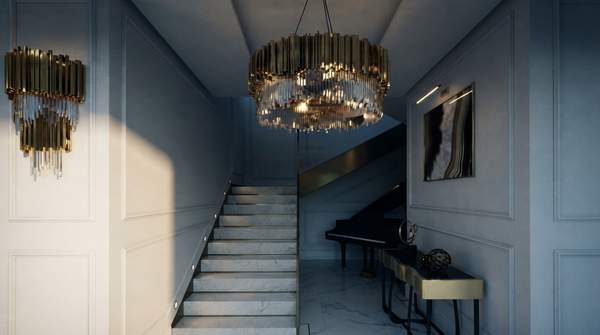
The most telling question to ask of a high-end interior is not "what did it cost?" but "what is it meant to make you feel?" Across the design industry, practitioners describe luxury as something felt as much as seen, built from texture, finish, weight, and light rather than from a price tag. A single renovation—an Antwerp office by Dieter Vander Velpen Architects—shows how those abstract goals translate into specific, deliberate material choices.
Beyond Expense: The Essence of Luxury Material Selection
Designers consistently draw a line between an expensive interior and a luxurious one. Writing on the characteristics of high-end homes, Decorating Den Interiors frames a luxurious space as "a combination of design principles, sensory experience and attention to detail that create a feeling of refinement, comfort and exclusivity"—not simply a collection of costly materials. Spectrum Design Group makes the same distinction from the practitioner's side: luxury interior design "isn't about filling a room with expensive furniture or chasing the latest trends," but about principles that let a space "resonate emotionally and function efficiently."
Nativa Interiors sharpens the point further: "Luxury is felt as much as it is seen," with sight, touch, sound, temperature, and scent all shaping whether a room feels calm and considered in daily use. The implication for material selection is direct. A designer choosing a surface is choosing the sensation it will deliver—warmth, permanence, softness, or edge—long before its name or price enters the picture.
A Framework for Sensory Design: Goals, Properties, and Materials
Reading these principles together, a pattern emerges: abstract design goals are achieved through specific sensory properties, which are in turn delivered by categories of materials. The table below deconstructs that chain, using the Antwerp office renovation as the worked example. It maps each stated design goal to the sensory property that carries it, the material category involved, and the documented instance from the project.
| Design Goal | Sensory Property | Material Category | Antwerp Office Example |
|---|---|---|---|
| Refinement, comfort, exclusivity | Holistic sensory experience: touch, sight, ambiance | Any, if quality and detail are held constant | The project's overall pairing of function and artistry |
| Warmth and comfort | Tactile and visual softness | Plush textures, soft finishes | Satin-gloss treatment of the Ziricote veneer |
| Permanence and substance | Grounded, weighty, authentic feel | Natural materials: real wood, stone, metal | Onyx and Patagonia marble islands |
| Luxury with roughness | Visual and tactile finish | Rare wood veneer, stained and glossed | Ziricote veneer revived with vibrant staining |
| Tactile beauty | Form and edge | Carved natural stone | Curved edges of the onyx and marble islands |
| Cohesion and harmony | Consistent material language | One palette carried throughout | Ziricote, onyx, and marble repeated across wings |
Used this way, the framework lets a reader move from observation to interpretation: a curved marble edge is not decoration but a deliberate invitation to touch, and a satin finish is not a styling choice but a decision about how light will behave on a surface.